How Long Does It Take to Become a Medical Assistant in 2026?
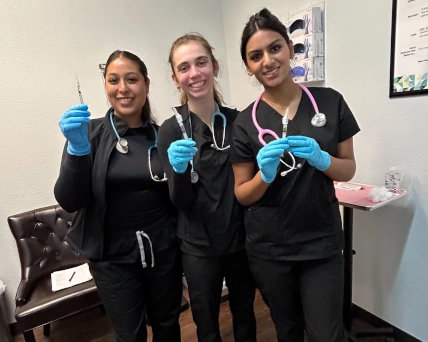
One of the first questions people ask before choosing a healthcare career is how long the whole thing takes — not just the training itself, but the full arc from starting a program to getting a first paycheck. For medical assisting, the answer is genuinely encouraging compared to most healthcare paths: with the right program, you can be working in a clinical setting within a few months of deciding to start.
Here’s a realistic breakdown of the full timeline — training options, what each involves, and what actually happens between graduation and employment.
How different program types compare
Medical assistant programs range from a few months to two-plus years. Here’s how the main formats break down:
Accelerated / hybrid programs (12–16 weeks)
The fastest route to employment. These programs are typically online-first with concentrated in-person lab days, designed for working adults and career changers who need to train without stopping their lives.
What 12–16 weeks typically covers:
- Medical terminology, anatomy, and body systems
- Patient intake — vital signs, medical history, chief complaint documentation
- Phlebotomy and venipuncture technique
- Injection administration (IM, SQ, intradermal)
- EKG/ECG electrode placement and image acquisition
- Infection control and OSHA/HIPAA compliance
- Specimen collection and processing protocols
- Dental materials and administrative procedures
- CCMA exam preparation integrated throughout
Post-graduation timeline: Graduates schedule the CCMA exam within 2–3 weeks of finishing. Exam results are typically available quickly. Most certified graduates find employment within 2–4 weeks of passing.
Community college certificate programs (9–12 months)
More paced than accelerated programs, covering the same core clinical content over a longer timeline with campus attendance typically required several days per week. Some include externship rotations in local medical offices.
Tradeoffs vs. accelerated formats:
- Longer time to employment (9–14 months total from enrollment to first job)
- Often requires more campus time during weekday business hours
- Sometimes includes general education requirements not specific to the MA role
- Total cost varies widely — $3,000–$12,000 depending on institution
Associate degree programs (18–24 months)
The most comprehensive option — includes general education requirements alongside the clinical curriculum. Appropriate if you want a broader academic foundation or are considering further healthcare education later. Not required for the medical assistant role itself.
Timeline to employment: 2+ years from enrollment to first job — and the starting salary is essentially identical to shorter-program graduates.
The full timeline: enrollment to first paycheck
For an accelerated program like our 16-week format, here’s what the realistic path looks like:
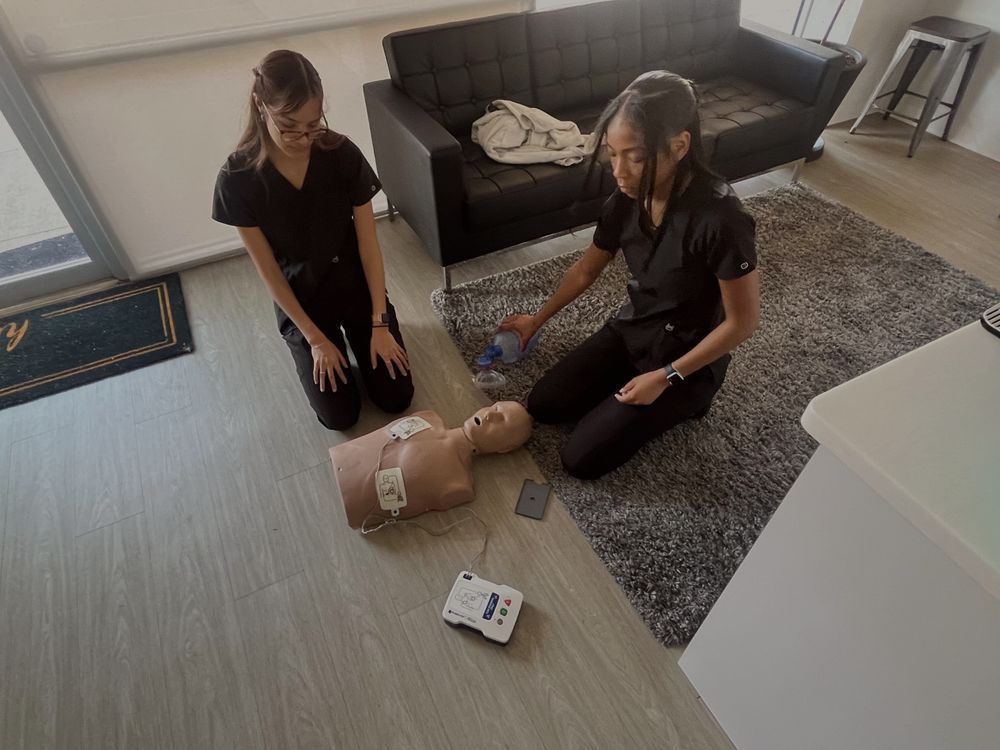
Weeks 1–16: Program Online knowledge content (live sessions + self-paced coursework between sessions), in-person lab days in real medical offices, externship component with supervised patient contact.
Weeks 17–18: Exam prep and scheduling Review CCMA content areas, schedule the NHA exam at an approved testing center or via remote proctoring.
Week 19: CCMA exam Results typically available within days. Most graduates from well-prepared programs pass on the first attempt.
Weeks 20–22: Job search With a CCMA credential and real clinical experience from labs and externship, the search moves fast. Certified graduates in Abilene typically receive offers within 2–4 weeks of starting the search.
Total: approximately 5 months from enrollment to first paycheck.
What affects the timeline
Program format and schedule compatibility
Online-first hybrid programs are the most time-efficient because they don’t require daily commuting or rigid campus scheduling. Programs that require full-time weekday attendance add logistical friction — especially for working adults — and don’t necessarily produce better clinical outcomes.
CCMA exam readiness
Graduates from programs with integrated exam prep sit for the CCMA sooner and pass more consistently. When CCMA content runs throughout the curriculum from week one, there’s no gap between graduation and exam readiness. This can shave 2–4 weeks off the total timeline compared to programs where exam prep is treated as a separate post-graduation activity.
Your local job market
In most markets, including Abilene, the demand for certified MAs is year-round and consistent. Practices hire continuously — not seasonally. Certified graduates with real clinical experience (from hands-on lab days and externship) typically receive offers faster than those without credentials or with only classroom-based training.
How proactively you job search
Graduates who start preparing their resume and identifying target practices in their final weeks of the program — rather than after graduation — consistently find positions faster. The job search component is not passive.
Does a longer program produce better career outcomes?
The data doesn’t support it. A well-designed 16-week program that includes real medical office training, integrated CCMA preparation, and an externship produces graduates who are as clinically ready as 12-month program graduates — and who start working 6–9 months sooner with less debt.
Program length correlates with institutional format and financial structure, not with job readiness or starting salary. Your CCMA credential and your clinical skills determine your employment outcome — not how many months you spent in class.
What the career looks like after you start
For context on what you’re working toward, here’s a realistic salary trajectory for a certified MA in Abilene:
Year 1 — entry level, certified: $36,000–$42,000/year. Building clinical speed, confidence, and professional reputation.
Years 2–3 — confident, efficient: $42,000–$50,000/year. Merit raises and job transitions to better-paying practices.
Years 4–6 — specialty placement: $48,000–$58,000/year. Moving into cardiology, dermatology, oncology, or other specialty settings.
Years 7+ — senior or supervisory: $55,000–$70,000+/year in larger practices or supervisory roles.
The BLS projects 15% growth in medical assistant employment through 2032. Starting sooner means more years of earnings at these levels — and less deferred income while training.
No experience required
A common misconception is that you need prior healthcare experience before you can enroll. You don’t. Medical assistant training programs are designed for complete beginners. The curriculum starts from foundational knowledge and builds through clinical skills and certification preparation. If you have a high school diploma or GED, you qualify to start.
What to do while you’re in training to shorten the job search
The five-month estimate above is for someone who starts their job search at graduation. Graduates who prepare while still in the program consistently find positions faster:
Build your resume during training: Don’t wait until you’ve graduated to start your resume. Document your clinical skills as you learn them — phlebotomy, EKG, injections, vital signs — and describe your externship experience specifically.
Research Abilene practices: Know which practices are actively hiring before you graduate. Follow local job boards, connect with externship site staff, and ask your program about their employer relationships.
Get CPR/BLS certified early: Most employers require it. Getting certified before graduation removes one post-graduation to-do item from the path to employment.
Start your CCMA prep in your final weeks: Don’t wait until graduation to schedule the exam. Know your exam date before your last session so the certification step is already in motion.
Graduates who take these steps during training routinely find their first position in under three weeks after passing the CCMA — well inside the 5-month total estimate.
You're only a few months from the medical assistant career you deserve.